Environmental engineering
Tackling odour nuisance
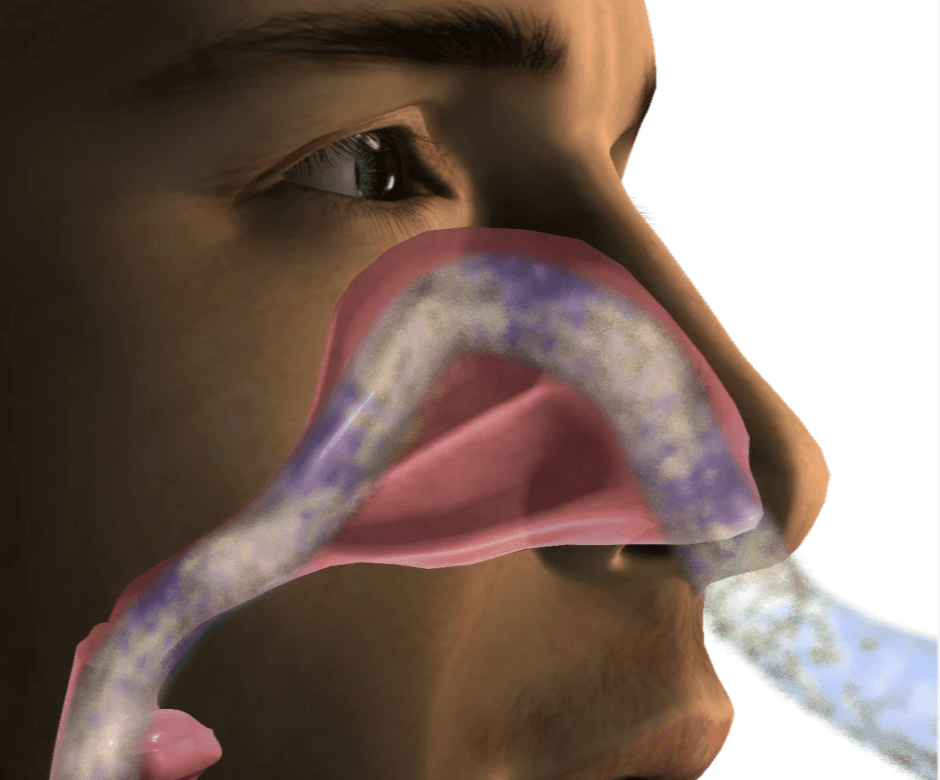
When we inhale certain gases and vapours, we perceive an odour characteristic of that substance.
But what exactly is odour, and how does odour nuisance arise?
Odour is a property of a substance that we perceive through, and detect with, our olfactory organs.
Odour perception
Perception is a complex physiological process in which the stimulus arising in the olfactory organs is transmitted by the nerves to the brain. In other words, odour as a response does not exist until there is a “nose”, that is, until a person is present who detects and perceives the substance with their nose. The chemical properties of a substance naturally influence whether its presence produces an odour sensation.
Odour perception is in fact a physiological phenomenon. The ability to detect odour is essentially nothing other than an individual sensory ability, an expression of one's sense of smell.
For a substance to cause an odour effect (for us to detect its presence with our sense of smell), its concentration must reach a minimum level, it must be soluble in water and fat, and it must belong to one of the “odour-carrying” chemical groups.
And what about nuisance odours?
The Odour Protection Handbook published in 2014 tells us that stench, that is, nuisance environmental odours, represent a special form of air pollution. Although the two concepts (nuisance environmental odour and polluted ambient air) cannot be completely separated, it is still worth treating them separately.
We speak of polluted ambient air when the air pollutant (or pollutants) is already present in the ambient air at a concentration that is harmful to health, regardless of whether its odour can be perceived or not.
Odour-causing substances may also be toxic, or may only be harmful to health above a certain concentration.
However, the human nose can detect some odours at concentrations several orders of magnitude below those harmful to health, and below the analytical detection limit. This clearly shows the fundamental difference between polluted ambient air and nuisance environmental odour, but it also highlights the fundamental difficulty of measuring odour analytically.
The basic harmful effect of nuisance environmental odours is that the presence of odorous gases and vapours in the ambient air, even without causing more serious damage to health, impairs people's well-being, thereby adversely affecting their quality of life and even reducing their capacity to work.
Breathing is a fundamental vital process, but together with the inhaled air we also breathe in any substances present in it that may be toxic or that, because of their concentration, “merely” cause a nuisance odour sensation.
Preserving our environment and clean air, and with them the well-being of humanity, must be among the fundamental goals of every civilised society. Accordingly, no one today disputes the need to combat odour pollution and nuisance environmental odours.
Odour protection
Fundamental importance is now attached to odour protection and its regulation under Hungarian environmental law.
Nuisance odours occurring in agriculture, livestock farming or industry must be managed: odour emissions must be reduced, and in this connection plants, sites and industrial operators that cause odours should set up their own odour management system and also carry out the periodic odour audits that play an important role in that system.
When permitting and reviewing technological activities that involve odour emissions, it is advisable to keep in mind how a properly designed and operated technology and monitoring system can prevent odour nuisance affecting residents around the facility.
For odour protection and odour problems, contact the Telepszagtalanítás team for a free consultation!