Environmental engineering
Odour reduction: what does an environmental engineer do?
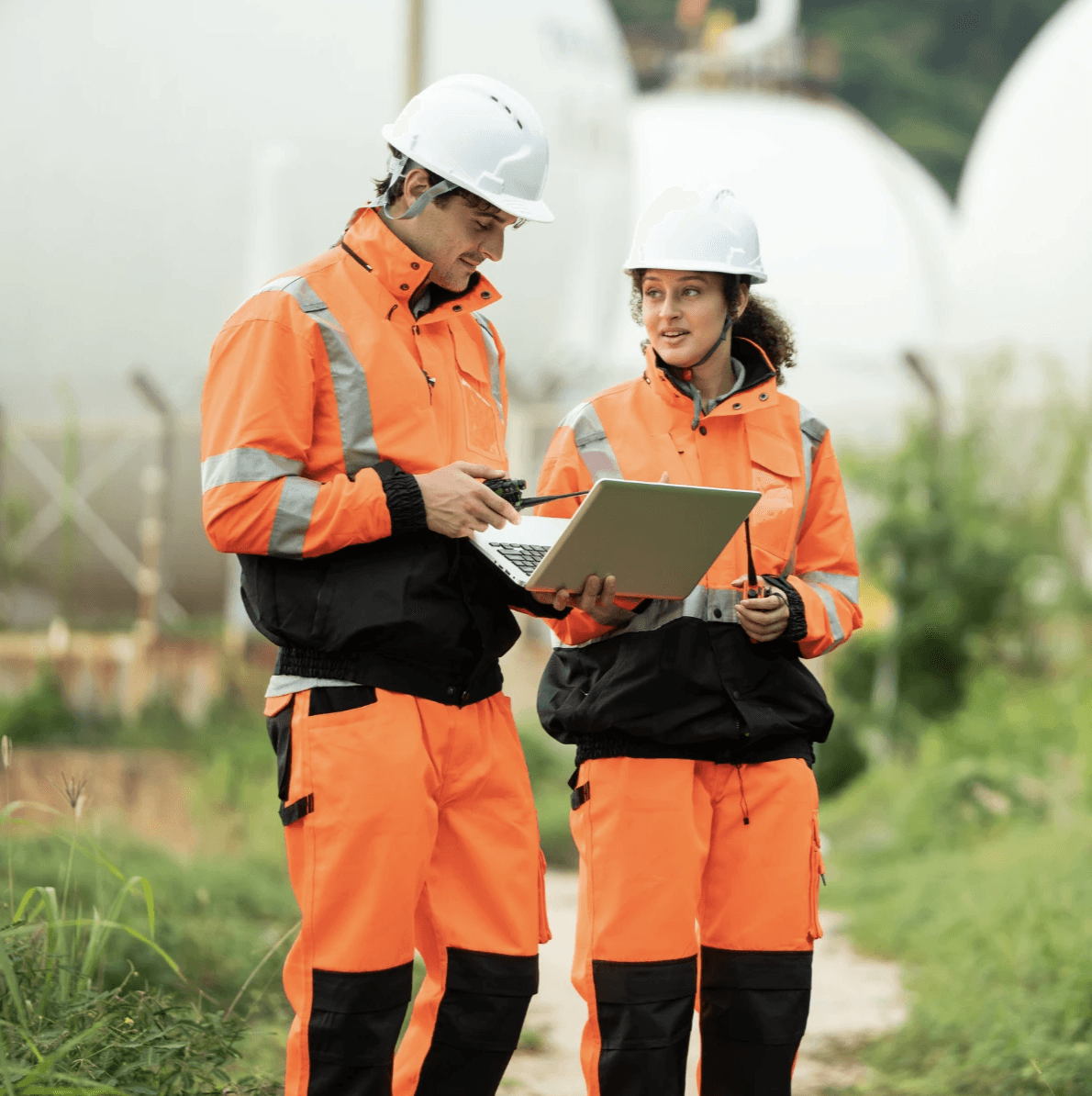
The work of an environmental engineer is highly complex and usually spans many different fields. In general, environmental engineers deal with protecting the natural environment, ensuring its sustainability and reducing the environmental impact of human activity.
What tasks can an environmental engineer take on?
They analyse how an investment or activity affects air, water, soil and wildlife.
They help develop industrial processes with a smaller ecological footprint, in other words they support and promote sustainable technologies.
Their legal responsibilities include checking compliance with environmental regulations.
Air quality protection is also within their remit: they measure, model and make recommendations for reducing air pollution in order to ensure compliance with air quality protection requirements.
Neutralising and eliminating odours is also part of air quality protection. To this end, they recommend the introduction and use of various odour-neutralising technologies.
Odour-neutralising technologies
Technologies for capturing or neutralising odours now take many different forms. There are mechanical filters, chemical and oxidation methods, absorbers (surfaces that absorb chemical substances), biological agents, biofilters and various covers.
Most technologies address one specific problem, but there are often cases where different technologies have to be combined to achieve the required efficiency.
It is rare for anyone to be an expert in several technologies, so it is best to turn to a specialist who knows both the complementary and the competing technologies.
How can an environmental engineer help?
With the problem described above, well-trained environmental engineers are best placed to help farmers, since it is in their interest to recommend the most effective technology to their clients in every case.
However, a technology is worth nothing if the odours remain. There are situations, for example at waste storage areas or even in animal by-product processing, where one technology can reduce odour concentration by 70%. But this also means that the remaining 30% may still be too high, and people living nearby may still notice unpleasant odours. In such cases it is worth combining different technologies. For example, it may be worth installing an osmogenic barrier after a biofilter to capture the remaining odours as well.
Odour control technologies can generally be sized on their own, and they may have many characteristics that need to be set up or adjusted during operation.
These include the volume of the biofilter and the quality of its filling medium, the amount of atomised liquid and the dosing of the active ingredient for an osmogenic barrier, the dosage for treatment agents based on biological or physical principles, and the surface area and permitted evaporation for covers.
Technical support
The question is not whether we have options, but who will support us in choosing the right technique. Measuring odour concentration can not only verify how odour control systems perform, but can also help set them up correctly.
Determining the right parameter values is also important so that we genuinely achieve the appropriate, precise efficiency while keeping costs within reasonable limits.
For expert help, feel free to get in touch with us!