Agriculture
An experiment in livestock farming
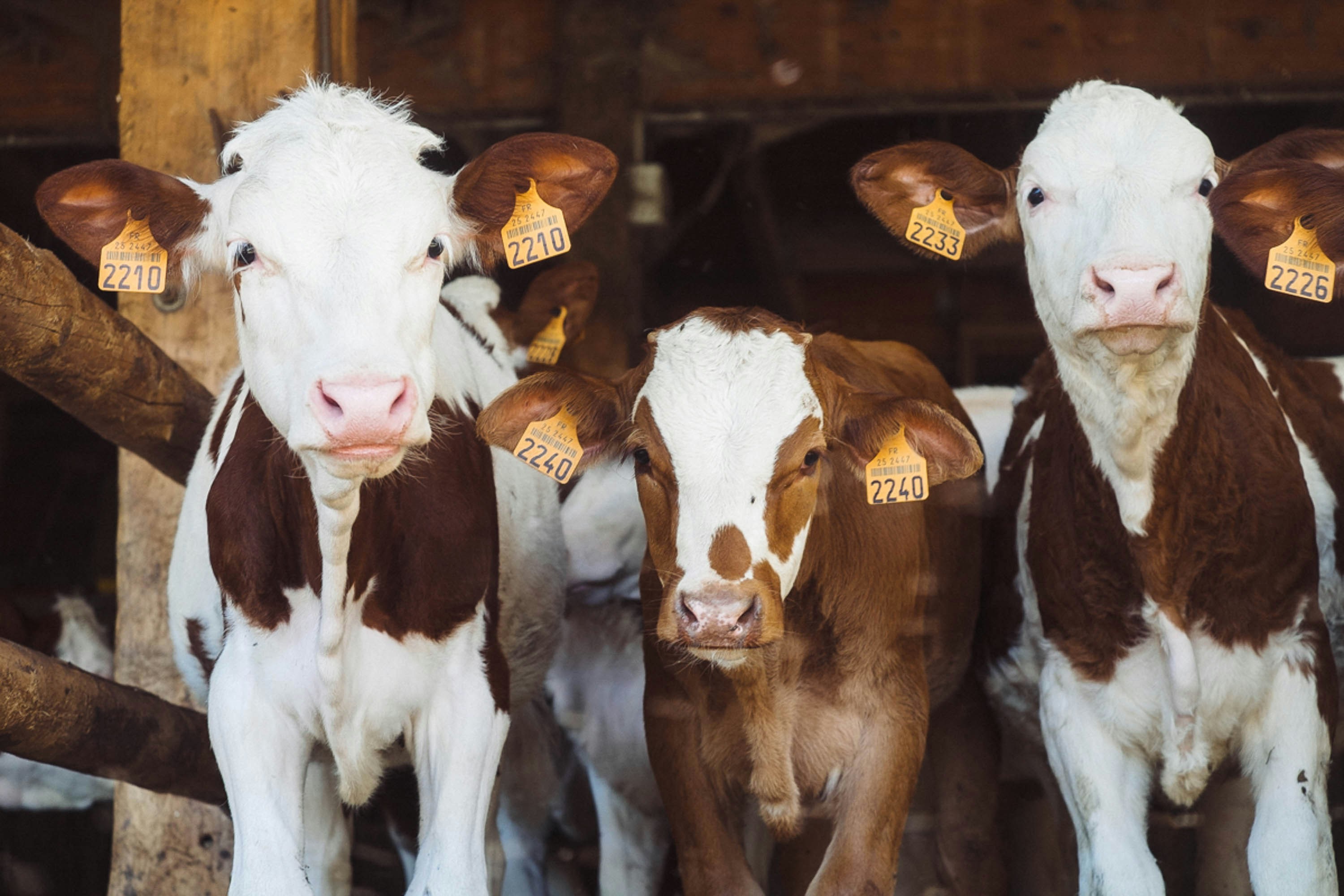
For Telepszagtalanítás, livestock farming has always been of particular importance, since in Hungary a great many livestock farms operate close to residential buildings. This can make coexistence difficult, and disagreements frequently arise between farmers and residents.
Farm animals near residential areas
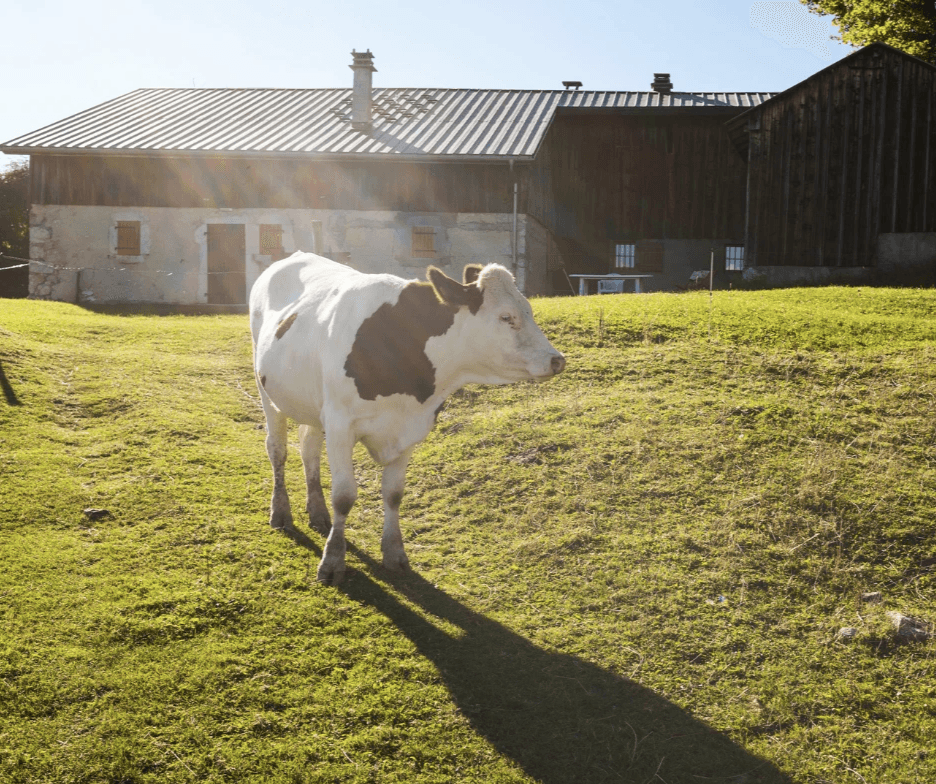
The fact that farm animals and residents live side by side is partly because the large cooperative farm (TSZ) centres were deliberately established close to villages and market towns, so that the local workforce could easily get from home to work. In other places, the settlement has slowly "grown around" the farm.
At a new Hungarian dairy farm we were given a special task: we had to test exactly what odour control efficiency we achieve with the product we use at given concentrate dosing rates. Based on the measurements, we then had to recommend the exact dosage and the material consumption for operation.
The experiment required for the measurement had to be carried out without an installed odour control system on the farm.
The site under investigation is a huge, modern barn that can house 1,300 dairy cattle. A special flushing system washes the manure out from under the animals several times a day, and the slurry is sent to an external storage covering a quarter of a hectare behind the farm. Air exchange in the barn is provided by several large side-wall fans.
An exciting experiment, a proven effect
We carried out the experiment as follows, allowing us to "simulate" the envisaged future situation: we brought a mobile odour control system to the site, which acts as a "cannon" to mix the odour control spray into the odorous air. We aimed the fan-equipped head in the discharge direction of the barn's exhaust fans. Laboratory staff then took air samples 10 metres from the fans, in the direction of flow of the exhaust air. This means we did not measure the odour concentration at the original source of the stench, since the odour had already been diluted at the sampling point. This ensured that both the untreated and the treated air came from the same point and could be compared.
The result of the test is extremely exciting, and at the same time it needs some explanation.
The best result was obtained when the odour control concentrate was mixed with water at a ratio of 0.1%.
The result clearly shows how effective this substance is at binding the odours produced by organic decomposition, and at what low cost the system can be operated.
The odour concentration of 93 OU/m³ measured 10 metres from the fan already indicated considerable dilution. After odour treatment this value fell to 25 OU/m³, and instead of the smell of manure only the mild scent of the odour control concentrate could be detected.
In further experiments, no manure odour could be detected at dosing concentrations of 0.2%, 0.3% and 0.4% either, but the intensity of the concentrate's scent increased proportionally. This observation indicated that, in terms of odour reduction, higher dosing brings no further improvement, so for economical operation there is no point in increasing the concentrate dosage further: it would only needlessly strengthen a scent while no longer reducing the odour concentration.
Accordingly, for economical and effective operation it makes sense to optimise the dosing of the odour control concentrate and avoid unnecessary overdosing.