Dust control
Dust control in industry
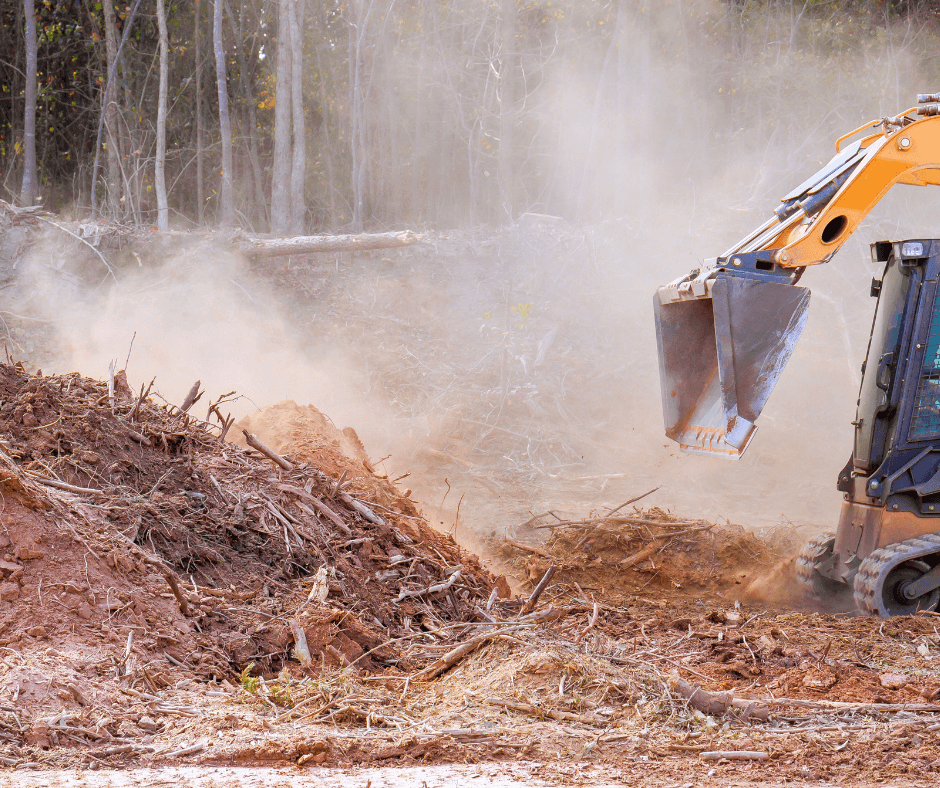
Dust generated at industrial sites is not only unpleasant: the suspended particles have a serious impact on workers' health, machine service life, product quality and the environment.
While many plants still think only in terms of extracting the dust or separating it dry, modern dust control now uses targeted, zone-controlled, high-pressure micro-fog generation. The question today is no longer whether dust control is needed, but how to achieve it intelligently, cost-effectively and in a process-controlled way.
Where is industrial dust a problem?
Almost every production sector is affected:
Mining and stone processing – crushing, screening
Metalworking – grinding, cutting
Woodworking – milling, sawing
Food industry – flour, sugar, feed
Logistics – bulk material handling
Chemical industry – handling powder-based raw materials
Waste management – microparticles are released
Dust can be of various types:
organic (wood, grain, biomass),
inorganic (cement, lime, stone dust),
metal particles,
combustion and process dusts,
hazardous or explosive fine dusts.
The most critical fraction is the PM10 and PM2.5 size range, as these particles enter the airways and pose long-term health risks.
The limits of conventional solutions
Classic extraction systems are energy-intensive, require a ductwork network as well as maintenance, and do not always cover the entire dust generation zone.
Dry spraying or water cannons work with water droplets that are too large: they wet the material and do not properly capture the suspended microparticles.
How can dust be "caught" in the air before it spreads?
The best solution for this is a high-pressure, zone-controlled micro-fog system. Modern industrial dust control is based on micro-droplet generation, which works on the following principle:
It atomises water at high pressure (up to 60–80 bar).
It produces water droplets of 10–20 microns.
The size of the micro-droplets matches the size of the suspended dust particles.
The water droplets "stick" to the dust.
The heavier particle settles.
The key point is that this is not wetting, but binding suspended dust in the air.
Intelligent control – it runs only where and when needed
One of the system's greatest advantages is zone control, which means that:
✔ the fog is not applied to the whole plant,
✔ only the active dust-generating points are served,
✔ water and energy use is optimised.
Outdoor dust protection – an active "protective barrier"
At industrial sites with a large footprint, such as gravel pits, concrete plants, waste yards or bulk material stores, a perimeter fog wall can be set up:
✔ a row of nozzles mounted on poles,
✔ along a stretch of up to 100–200 metres,
✔ taking the prevailing wind direction into account,
✔ forms an active dust containment zone.
The dust does not leave the site, reducing complaints from residents and regulatory risks.
Dual function: dust and odour neutralisation
In certain industries, dust and odour generation cause problems at the same time (e.g. the food industry, feed production, waste treatment, composting sites). In such cases the dual function can be used: a natural, plant-based odour-neutralising concentrate can be dosed into the system:
✔ the essential oil "settles" on the surface of the micro-droplets,
✔ binds to the odour molecules,
✔ forms a larger particle,
✔ and settles.
The result: cleaner, fresher air.
What results can be achieved?
Based on experience from industrial installations:
✔ at least 50–70% reduction in dust concentration,
✔ significantly lower PM values,
✔ a better working environment,
✔ lower cleaning costs,
✔ less machine wear,
✔ less explosive dust.
What does this mean for Hungarian industry?
For manufacturing and processing plants in Hungary, the micro-fog system:
✔ can be retrofitted,
✔ can be expanded modularly,
✔ can be automated,
✔ saves water,
✔ is energy-efficient,
✔ can be combined with an existing extraction system.
Dust is not just a by-product, but a technological factor that has to be controlled.
Intelligent, high-pressure micro-fog generation intervenes directly in the air, can be controlled locally, and provides a cost-effective and sustainable solution.
The question today is no longer whether dust control is needed, but how tightly a given industrial plant wants to keep its dust emissions under control.