When a factory's odour is no secret
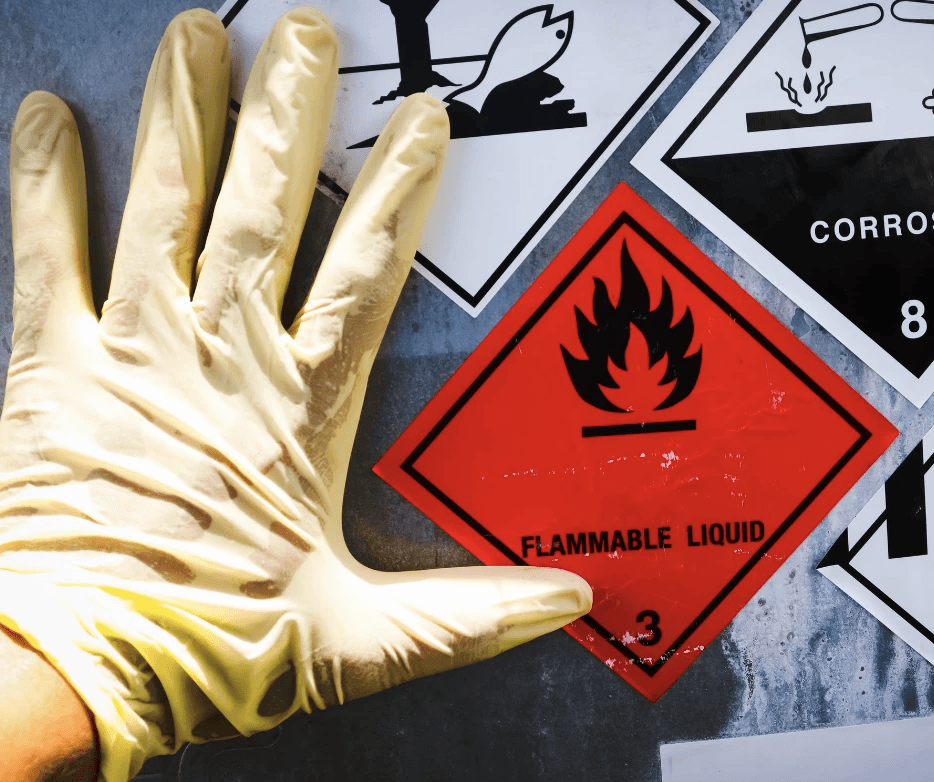
Odour burden in the chemical industry
The chemical industry is subject to strict regulations on occupational safety, materials handling and polluting activities, so it is not surprising that its many different manufacturing activities can often involve nuisance odours.
One such area with significant odour emissions is plastic foaming and lamination for the production of specialist consumer and industrial products. At one Hungarian plant, this activity takes place right next to a large housing estate. Although point source tests consistently find that its dust and other chemical emissions are below the limit values, the odour still bothers local residents as well as staff at neighbouring sites and offices.
As long as 10 years ago, the company's management realised that action was needed and that they could not wait for the authorities to step in or for public outrage to boil over. First they only commissioned a study to verify whether the odour they emitted was really a nuisance. Once the measurements confirmed their fears, they began looking for a solution. This marked the start of one of Telepszagtalanítás's longest-running and most challenging projects.
Results proven by odour measurement
Air laden with a distinctive ammonia smell and other odours resembling burnt plastic proved a major challenge. We installed the osmogenic barrier we recommended on the stacks of the production lines. We recommended this not only because it makes it easier to repair and maintain the pipes and nozzles from the outside, but also because of the high temperature of the air leaving the stack.
On leaving the stack, the air mixes with the outside air and immediately cools to 40-50 degrees Celsius, so the added spray does not start to evaporate straight away but binds the odour-causing particles.
In 2016, after installation, the plant's management wanted not only to know but also to demonstrate how effectively the odour control system works. As a housing estate home to several thousand people lies 400 metres from the plant, they had to be certain. They could not afford for residents to become outraged and turn to the authorities.
The tests confirmed that the emitted odours were extremely strong at every stack (2,700-10,200 OU/m3). The osmogenic barrier reduced this by at least 90% at every stack, based on samples of the treated air, achieving an odour concentration of 267-400 OU/m3 near the point sources, which according to dispersion models becomes unidentifiable within 100 metres of the plant.
The plant is constantly looking for effective and economical production solutions, so it began working with a raw material that increased the dry matter content of the emitted smoke. Airborne fly ash can release odours several hundred metres from the point source just as an evaporating substance can.
The task of the odour control system is not only to bind the molecules that cause the odour, but also to "scrub" from the air the dust and solids that travel long distances. Precision atomisation creates droplets of between 10 and 50 microns from the mixture of water and odour control concentrate, which, thanks to their electrostatic charge, attract the larger particles and more complex molecules in the air.
Extending the service after successful operation
To achieve greater dust suppression and odour control, we extended the plant's nozzle rows 4 years after the first installation. The plant's management then wanted to make sure once again that the odour control was working with adequate efficiency.
During the tests, samples were taken not only at and near the point sources, but also downwind around the plant at distances of 100 and 200 metres, to be sure that odour dispersion was being prevented. Although odour concentrations of 2,800 and 3,900 OU/m3 were measured at the stacks without treatment, with odour control running the measurable concentration at the edge of the factory site was only 73 OU/m3, only 24 OU/m3 at 100 metres in a straight line from the stacks, and at 200 metres no odour impact could be identified.
Industrial odour burden
Point sources that release some chemical substance into the air are not necessarily found only at companies with chemical industry activities. The paint booth of a company manufacturing specialist industrial vessels has an extraction outlet whose odour bothers local residents. Here it is the smell of solvents that annoys residents. Testing the odour concentration is complicated by the fact that the laboratory may not take samples directly from flue gas that also contains volatile organic compounds. The plant's emissions of these gases are far below the level caused by spray-painting a bicycle in a garage, yet the participants in the measurement must not be made to inhale them directly.
The laboratory specialist could only take the sample of the gases leaving the stack during painting in the plant's yard, 50 metres in a straight line from the emission point.
The reduction in odour emission
During normal operation, while solvent-based paint was being sprayed onto the products in the booth, the laboratory measured an odour concentration of 257 OU/m3 in the sample. When the odour control mixture began to flow out of the nozzles mounted on the stack, the odour concentration detected in the sample was only 24 OU/m3.
We have achieved successful results with our partners in the chemical industry, the plastics industry and industrial manufacturing alike, and with proven measurement results we have overcome the odour emissions associated with their activities and the resulting nuisance odours.