Environmental engineering
Odour control technologies in the food industry
Odour generation is a natural part of food industry operations, whether from cooking and frying processes or from handling unavoidable by-products. Unpleasant odours not only worsen the working environment but, because of residents' complaints and regulatory requirements, also pose a serious business risk.
Innovative odour control in slaughterhouse technology
Back in 2016, at one of the country's largest rural slaughterhouses, we installed an osmogenic barrier odour control system on the ventilation system of the livestock lairage.
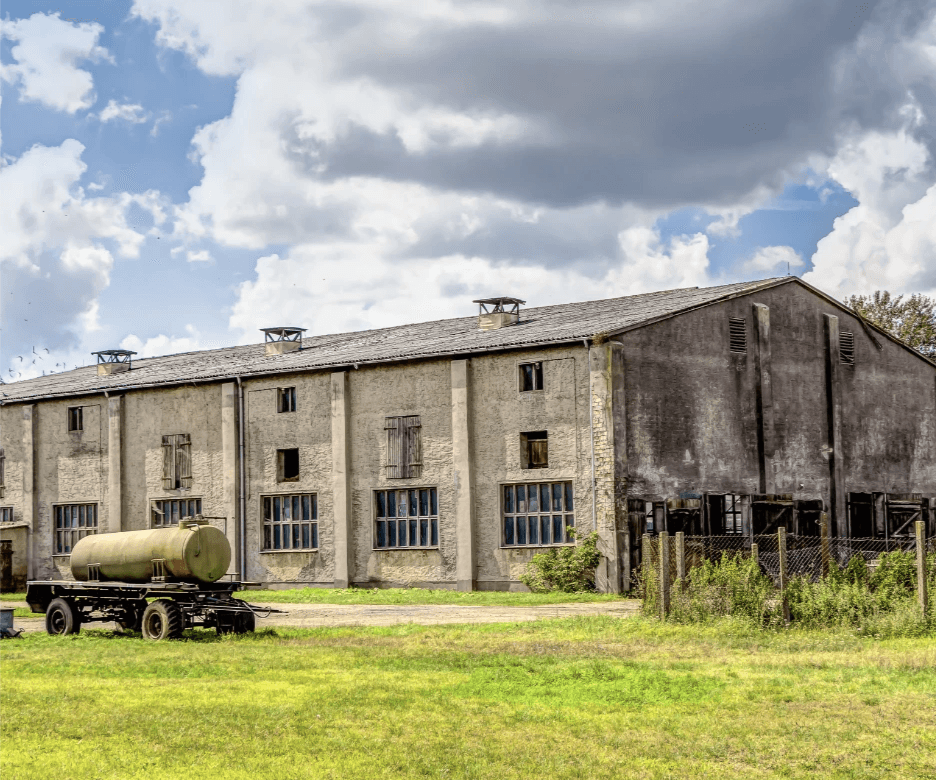
On the roof of the huge concrete building of several thousand cubic metres, two industrial roof fans exhaust the air extracted from the area holding animals before slaughter. Its characteristic smell, reminiscent of pig manure, required immediate action.
Official measurements carried out after installation confirmed the effectiveness of the technology: the odour concentration of the exhaust air fell from 143 OU/m³ to just 14 OU/m³.
Comprehensive system expansion
In 2021 the odour control system had to be expanded, as emissions from the singeing, scalding, dehairing and casing processing areas were also causing a significant odour load. Thanks to the latest upgrades, the system can now treat almost the entire volume of air extracted from the plant, ensuring environmental compliance and protecting the surrounding residential area.
A premium product without odour nuisance
In a small Hungarian village, premium products are made that we spread on our bread from small jars at breakfast. The fats needed for them are produced by rendering poultry meat by-products, and large amounts of nuisance odours are released during the process.
The four rendering kettles operating there share two exhaust stacks. At the time of sampling, the odour concentration was 2000 OU/m³ at the first stack and 2300 OU/m³ at the second.
Here we introduced a dual technological solution:
a stack-top nozzle system that sprays odour control agent directly into the exhaust air,
and an ultrasonic atomiser that introduces an odour control aerosol with a droplet size of 5–10 microns into the greasy air via the suction side of the fan.
As a result of the intervention, the odour concentration in the samples fell to 107 and 113 OU/m³ – this represents an efficiency of more than 95%.
An effective and reliable solution
Effective odour control is no longer an option but a basic requirement in the food industry. With our modern technologies we can drastically reduce odour emissions, ensuring that plants comply with legislation, operate in an environmentally friendly way and enjoy the acceptance and support of the community and local residents.
Odour-free operation is the next step in the industry's development, and we support our clients in it as a reliable partner.