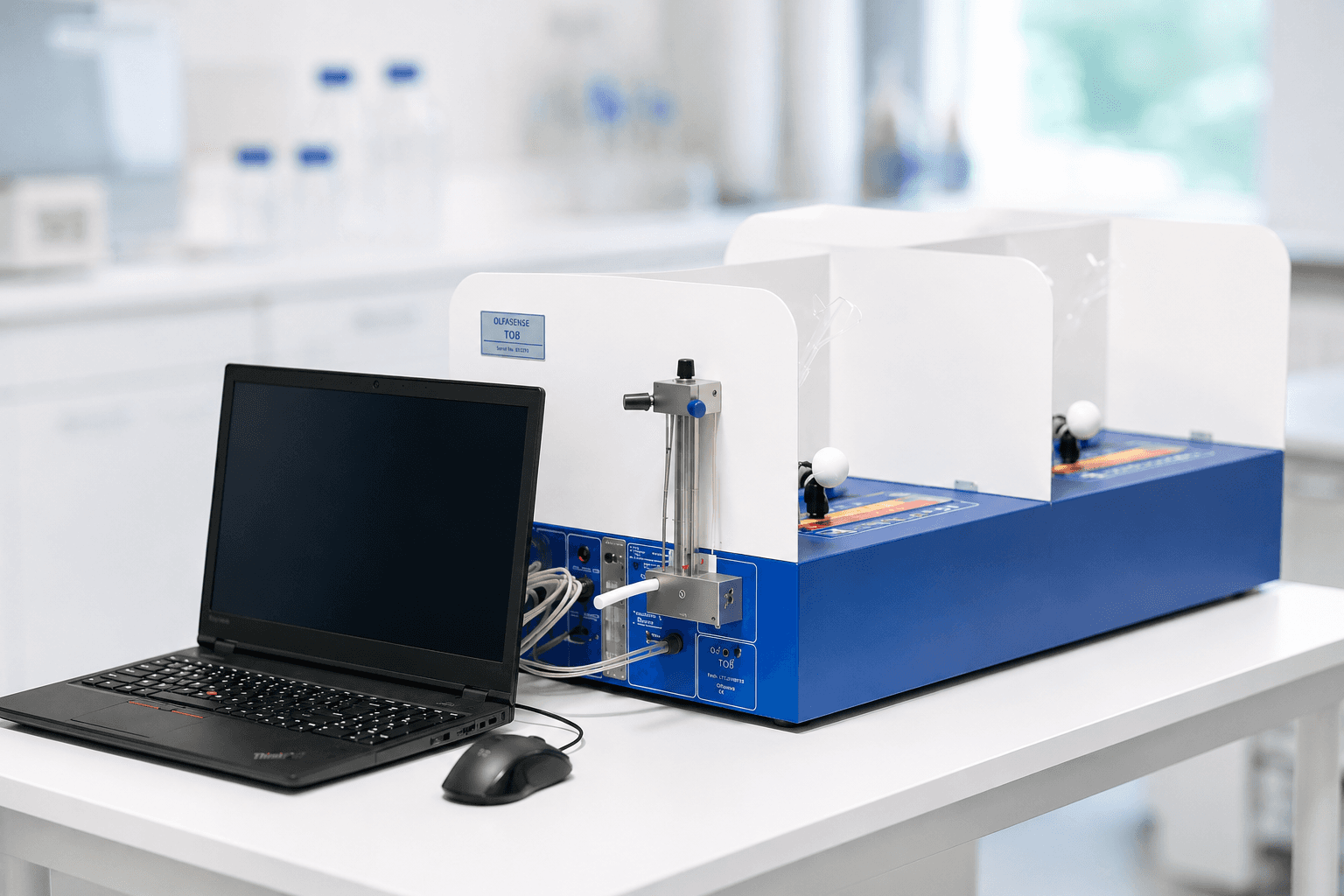
Why is odour impact measurement important?
Regulatory compliance
In many industries, odour emissions are not just a comfort issue but also an environmental and operational risk. When operating a site, it is important to demonstrate that odour emissions are managed in a measurable, documented and professionally substantiated way. Odour impact measurement provides objective data on both the baseline and the result after intervention. This is particularly useful in permitting processes, consultations with the authorities and complaint handling.
Regulatory procedures
With odour complaints, the biggest problem is often that odour perception is subjective: what one person finds tolerable may already be a nuisance to another. Odour impact measurement provides something to hold on to: quantifiable, comparable data. A well-documented measurement helps show the site's starting condition, the technology it applied and the change that occurred after the intervention. This can reduce disputes and gives a stronger professional basis for communication.
Technology decisions
When choosing an odour control system, it is not enough to know that “there is an odour problem”. It is important to understand where the odour arises, how intense it is, when it occurs and under what conditions it gets stronger. Measurement helps decide whether a fixed or mobile system is needed, at which points it is worth intervening and what performance can realistically be expected. Measurement after the intervention then gives feedback on how effectively the chosen technology is working.
Community communication
An odour problem is often not only a technical but also a communication issue. Especially for livestock farms, slaughterhouses, wastewater treatment operators and industrial plants, it is important to be able to show the surrounding community clearly that the business is dealing with the problem and taking measurable steps to reduce it. Odour impact measurement provides objective data that can help at public forums, consultations with the local council or during complaint handling. It shows not a promise, but a measurable state and change.
Verifying results
The real value of odour control technology shows when the result can be measured and documented. Odour impact measurement makes it possible to compare the situation before and after the system. This is especially important for investment decisions, internal reporting and long-term operation. Measurement results can help prove that the system reduces odour impact not only noticeably but also quantifiably.
Legal background: Government Decree 306/2010 (XII. 23.) on the protection of air
The definition of “odour nuisance”
“an air pollutant or mixture of substances with an odour impact which … is alien to the given environment and disturbs the intended use of the affected area.” Requirement: “Activities generating odour nuisance may only be carried out using the best available techniques.” This decree is the basis for regulating odour impacts in Hungary.
VM Decree 4/2011 (I. 14.)
This decree: - defines air pollution levels - sets emission limit values - addresses “environmental pollution by odour nuisance”
Standard MSZ EN 13725:2003 “Air quality – Determination of odour concentration by dynamic olfactometry”
This standard: - defines the measurement method - ensures comparable results - is the procedure accepted by the authorities
Further professional materials
- Odour protection handbook - Professional summaries on odour nuisance control - Environmental publications These help in understanding regulation and practice.